Within Yukon UFOs
When a Yukon Sky Mystery Became a Meteorite
The Tagish Lake meteorite fall shows how a dramatic northern sky event can move from strange report to identified natural event.
On this page
- What people saw in January 2000
- How fragments changed the evidence
- What UFO cases can learn from it
Page outline Jump by section
Introduction
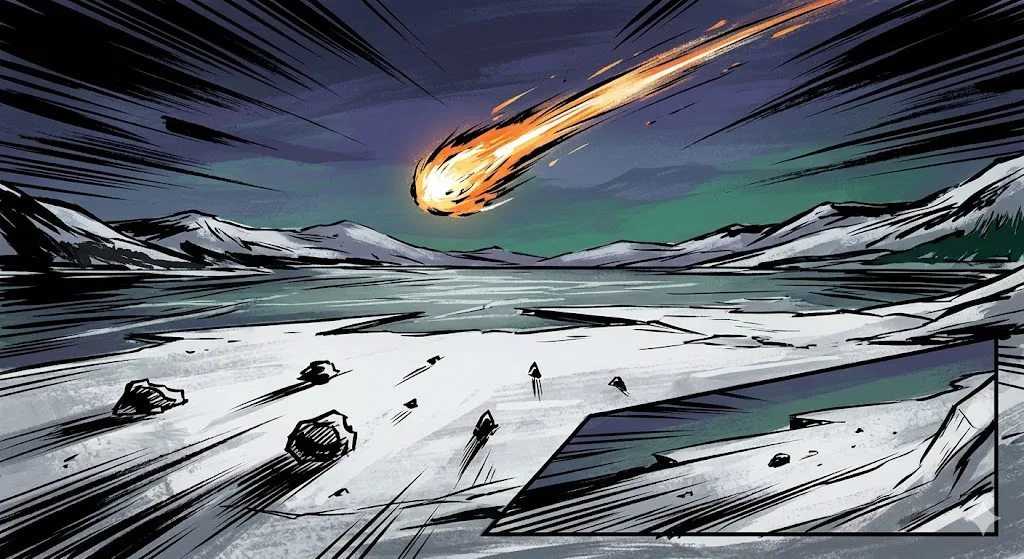
The Tagish Lake fireball is one of Yukon’s best examples of a dramatic “what was that?” sky event becoming a solved natural mystery. On 18 January 2000, at about 8:43 a.m. local time, a brilliant fireball crossed the morning sky over Yukon and northern British Columbia, with reports also coming from Alaska and the Northwest Territories. It produced loud detonations, a lingering dust trail and enough spectacle to be remembered in the same northern sky culture that also produces UFO reports. But unlike many ambiguous sightings, this one quickly moved from witness testimony to physical evidence: meteorite fragments were found on the frozen Taku Arm of Tagish Lake. [Western Meteor Physics Group]aquarid.physics.uwo.caWestern Meteor Physics Group Fireball Events — Western Meteor Physics GroupWestern Meteor Physics Group Fireball Events — Western Meteor Physics Group
That is why the case matters in Yukon UFO history. The Tagish Lake event shows how an extraordinary sky report can be both genuinely astonishing and fully non-exotic. It was not “nothing”; it was a rare carbon-rich meteorite fall, recorded by satellites, seismic stations and infrasound, then confirmed by recovered fragments. For readers comparing Yukon’s unresolved UFO stories with explained events, Tagish Lake is a useful benchmark: the better the chain from sighting to instrument data to material recovery, the less room remains for speculation. [Western Meteor Physics Group]aquarid.physics.uwo.caWestern Meteor Physics Group4709brown.p65…
What people saw in January 2000
The fireball appeared in daylight, shortly before sunrise in parts of the region, which made it especially memorable. The Western Meteor Physics Group describes it as an “exceptionally long and bright” fireball seen across Yukon, northern British Columbia, parts of Alaska and the Northwest Territories. Thousands of people reportedly witnessed it, and some captured photographs or video of the dust cloud that remained after the object fragmented. [Western Meteor Physics Group]aquarid.physics.uwo.caWestern Meteor Physics Group Fireball Events — Western Meteor Physics GroupWestern Meteor Physics Group Fireball Events — Western Meteor Physics Group
The basic public experience had all the ingredients that often feed UFO stories: a sudden bright object, unusual colour, a trail in the sky, delayed booms, shaking and uncertainty about what had happened. The Meteoritical Bulletin records a “brilliant fireball” followed by loud detonations, widespread observations over Yukon and northern British Columbia, and dust clouds from terminal fragmentation events. NASA’s Astrobiology account notes an orange-white and blue contrail that lingered for 10 to 15 minutes. [LPI]lpi.usra.eduLPIMeteoritical Bulletin: Entry for Tagish LakeLPIMeteoritical Bulletin: Entry for Tagish Lake
The event also reached local UFO culture. A Whitehorse Daily Star report from the day of the fall, preserved by ExploreNorth, quoted Yukon UFO investigator Martin Jasek commenting on reports of similar bright meteor-like events in the region. That does not make the Tagish Lake fireball a UFO case in the strict sense; rather, it shows how the same witness networks and sky-watching habits that collect UFO reports may also catch meteors, bolides and other natural phenomena. [ExploreNorth]explorenorth.comtagish meteor 20000118The Tagish Lake meteorite, 2000…
For a first observer, the difference between “unidentified” and “unexplainable” can be invisible in the moment. A large meteor can look artificial, seem to move strangely because of perspective, leave a persistent trail, and produce sounds after a delay because light reaches the observer before the shock wave. The Tagish Lake case matters because the later evidence did not merely offer a plausible explanation; it tied the spectacle to a named meteorite fall with a recorded time, fall area and recovered material. [LPI]lpi.usra.eduLPIMeteoritical Bulletin: Entry for Tagish LakeLPIMeteoritical Bulletin: Entry for Tagish Lake

How fragments changed the evidence
The decisive turn came one week later. Local resident Jim Brook was travelling near his hunting lodge on the Taku Arm of Tagish Lake when he noticed blackened pieces on the frozen lake surface. The Royal Ontario Museum records that Brook correctly guessed they were fragments from the recently witnessed fall, collected about one kilogram of material, avoided handling the specimens with bare hands and kept them cold in a freezer. [collections.rom.on.ca]collections.rom.on.caTagish Lake – Works – e MuseumTagish Lake – Works – e Museum
That handling mattered. Many meteorites are altered after they land, especially by water, dirt, heat, human contact and time. Tagish Lake fell onto ice and snow in winter, and the first recovered pieces were kept frozen. The Royal Ontario Museum notes that this raised the possibility that the samples could preserve fragile liquid or gaseous components, while later museum writing describes the meteorite as containing minerals and carbon-based chemical compounds from the early Solar System. [collections.rom.on.ca]collections.rom.on.caTagish Lake – Works – e MuseumTagish Lake – Works – e Museum
A larger search followed in spring. The Meteoritical Bulletin reports that about 500 additional specimens were located between 20 April and 8 May 2000, although only about 200 were retrieved because many had melted down into the ice. The total collected mass was between 5 and 10 kilograms, from a strewnfield at least 16 by 3 kilometres, oriented roughly south-southeast. [LPI]lpi.usra.eduLPIMeteoritical Bulletin: Entry for Tagish LakeLPIMeteoritical Bulletin: Entry for Tagish Lake
This is the point where the case stops behaving like a rumour and starts behaving like a solved fall. The evidence was not just “many people saw something”. It became a linked chain: eyewitnesses and photographs of the dust trail, satellite detection, seismic and infrasound records, a mapped fall area, recovered fragments, laboratory classification and curated specimens. The official Meteoritical Bulletin entry identifies Tagish Lake as a fall on 18 January 2000 at 08:43:42 PST, classed as a carbonaceous chondrite, C2 ungrouped. [LPI]lpi.usra.eduLPIMeteoritical Bulletin: Entry for Tagish LakeLPIMeteoritical Bulletin: Entry for Tagish Lake
Why scientists cared about this meteorite
Tagish Lake was not just any meteorite. Carbonaceous chondrites are primitive, carbon-rich meteorites that preserve information about the early Solar System. The Meteoritical Bulletin describes the Tagish Lake material as matrix-dominated, with phyllosilicates, sulphides, magnetite, carbonates and a carbon content of 5.4 weight per cent. The Royal Ontario Museum describes it as one of the rarest kinds of meteorite in its collection context, containing early Solar System minerals and carbon-based compounds. [LPI]lpi.usra.eduLPIMeteoritical Bulletin: Entry for Tagish LakeLPIMeteoritical Bulletin: Entry for Tagish Lake
The technical study of the fall also made the sky event more concrete. A 2002 Meteoritics & Planetary Science paper by Peter Brown and colleagues used seismic, satellite and infrasound records to estimate that the pre-atmospheric meteoroid had a mass of about 56 tonnes, a diameter of about four metres and high porosity. The same study estimated an event energy of roughly 1.66 kilotons of TNT equivalent from infrasound, and suggested that more than 97 per cent of the original body was lost during atmospheric ablation. [Western Meteor Physics Group]aquarid.physics.uwo.caWestern Meteor Physics Group4709brown.p65…
The surviving material was only a tiny remnant of a much larger body. Brown and colleagues estimated that about 1,300 kilograms of gram-sized or larger material may have survived ablation to reach the surface, though only a much smaller amount was recovered. That contrast helps explain why an event can be enormous in the sky but leave no obvious crater and only scattered small fragments on the ground. [Western Meteor Physics Group]aquarid.physics.uwo.caWestern Meteor Physics Group4709brown.p65…
Later research kept Tagish Lake scientifically important rather than anomalous in a paranormal sense. Studies have examined its organic chemistry, water-related alteration, isotopes, mineralogy and possible links to primitive asteroids. In public-facing terms, its importance lies in being a rare, well-preserved sample of ancient Solar System material, not in being mysterious after investigation. [psrd.hawaii.edu]psrd.hawaii.eduTagish LakeMeteorite12 Dec 2002 — Studies show that the meteorite is intermediate in composition between the two most primitive groups o…

What UFO cases can learn from it
The Tagish Lake fireball is useful because it separates three things that are often blurred together: a strange experience, an unidentified first report and a final explanation. On the morning of 18 January 2000, many witnesses were right to say they had seen something extraordinary. In the first minutes, many would not have known what it was. After recovery and analysis, however, the correct label was not UFO but meteorite-producing fireball. [Western Meteor Physics Group]aquarid.physics.uwo.caWestern Meteor Physics Group Fireball Events — Western Meteor Physics GroupWestern Meteor Physics Group Fireball Events — Western Meteor Physics Group
For Yukon UFO history, the lesson is not that every strange report is a meteor. It is that solved cases show what strong evidence looks like. Tagish Lake had multiple independent observation channels: public witnesses, photographs and video of the dust trail, satellite detection by United States Department of Defence systems, seismic stations at Whitehorse, Haines Junction and Dease Lake, and infrasound detections as far away as Manitoba. [Western Meteor Physics Group]aquarid.physics.uwo.caWestern Meteor Physics Group4709brown.p65…
That kind of evidence changes the question. Instead of asking only whether witnesses were sincere, investigators could ask where the object travelled, how much energy it released, how it fragmented, what material reached the ground and what the recovered samples were made of. The explanation did not depend on dismissing witnesses; it depended on using their reports alongside instruments and physical specimens. [Western Meteor Physics Group]aquarid.physics.uwo.caWestern Meteor Physics Group4709brown.p65…
This is especially important in Canada, where official language around UFOs and UAPs is deliberately cautious. Transport Canada has stated that “UFO” in aviation occurrence records can refer to drones, balloons, meteors, weather phenomena, birds and other things, and should not be read as meaning extraterrestrial. Sky Canada, the federal review led by the Office of the Chief Science Advisor, likewise framed UAP reporting as a question of public reporting and data management, not as a project to prove or disprove extraterrestrial visitors. [Transport Canada]tc.canada.caTransport Canada4. High Altitude Object IncidentsTransport Canada4. High Altitude Object Incidents
Why Tagish Lake belongs in Yukon’s UFO map
Strictly speaking, the meteorites fell in northern British Columbia, on the Taku Arm of Tagish Lake, just south of the Yukon border. But the sky event belongs naturally in Yukon’s UFO and sky-mystery history because it was widely seen over Yukon, was reported by Yukoners, was visible as far away as Whitehorse, and entered the same regional conversation about dramatic northern lights in the sky. [collections.rom.on.ca]collections.rom.on.caTagish Lake – Works – e MuseumTagish Lake – Works – e Museum
It also helps place more ambiguous Yukon stories in perspective. The 1996 Klondike Highway reports near Fox Lake remain a different kind of case: testimony-heavy, locally significant and not resolved by recovered material. The 2000 Tagish Lake fireball, by contrast, shows the opposite end of the spectrum: a spectacular multi-witness event that became better understood as more evidence arrived. The comparison is useful because both involve northern witnesses seeing something striking, but only one produced a physical object that laboratories could classify.
The Tagish Lake case therefore strengthens, rather than weakens, serious UFO analysis. It reminds readers that “explained” does not mean boring or trivial. A solved meteorite fall can be more remarkable than a vague unresolved light. It also shows why the best investigations do not start by forcing a conclusion; they preserve details, compare reports, look for instrument records, search for physical traces and remain willing to change the label when the evidence improves.

The solved mystery, in plain terms
The Tagish Lake fireball began as a startling northern sky event and ended as one of Canada’s most scientifically valuable meteorite falls. People saw a brilliant object and heard detonations because a fragile, carbon-rich meteoroid entered the atmosphere, fragmented high above the region and scattered meteorites across frozen lake surfaces. Its path and energy were reconstructed from satellite, seismic and infrasound records, and its identity was confirmed by recovered fragments. [Western Meteor Physics Group]aquarid.physics.uwo.caWestern Meteor Physics Group4709brown.p65…
Its value for Yukon UFO history is comparative. It is a reminder that a witness can be accurate about the experience while wrong, or simply uncertain, about the cause. It is also a reminder that some sky mysteries do get solved when conditions are favourable: many witnesses, good timing, recoverable terrain, careful handling and scientific follow-through. The Tagish Lake fireball is not a loose end in Yukon’s UFO story. It is the control case: a strange northern sky event that became a meteorite.
Amazon book picks
Further Reading
Books and field guides related to When a Yukon Sky Mystery Became a Meteorite. Use these as the next step if you want deeper reading beyond the article.
Meteorites
Directly explains meteorites, classification, recovery, and scientific analysis relevant to the Tagish Lake meteorite.
The UFO Experience
Supports the article's theme of comparing unexplained sky sightings with cases later resolved through physical evidence.
Rocks from space
First published 1994. Subjects: Pictorial works, Meteorites, Asteroids, Handbooks, manuals, Comets.
METEORITES: A PETROLOGIC, CHEMICAL AND ISOTOPIC SYNTHESIS
First published 2004. Subjects: Meteorites.
eBay marketplace picks
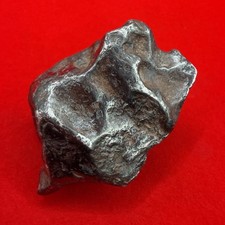
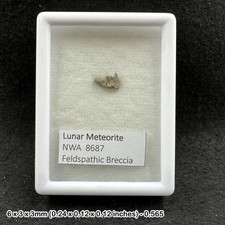
Marketplace Samples
Example marketplace items related to this page. Use the search link to explore similar finds on eBay.
Endnotes
-
Source: lpi.usra.edu
Title: LPIMeteoritical Bulletin: Entry for Tagish Lake
Link: https://www.lpi.usra.edu/meteor/metbull.php?code=23782 -
Source: astrobiology.nasa.gov
Title: Astrobiology NASA
Link: https://astrobiology.nasa.gov/news/the-tagish-lake-meteorite/Source snippet
The Tagish Lake Meteorite: | News | Astrobiology...
-
Source: explorenorth.com
Title: tagish meteor 20000118
Link: https://explorenorth.com/library/history/tagish_meteor-20000118.htmlSource snippet
The Tagish Lake meteorite, 2000...
-
Source: collections.rom.on.ca
Title: Tagish Lake – Works – e Museum
Link: https://collections.rom.on.ca/objects/1827361/tagish-lake -
Source: rom.on.ca
Link: https://www.rom.on.ca/magazine/looking-back-new-year-meteorite-discovery -
Source: psrd.hawaii.edu
Title: Tagish Lake
Link: https://www.psrd.hawaii.edu/Dec02/TagishLake.htmlSource snippet
Meteorite12 Dec 2002 — Studies show that the meteorite is intermediate in composition between the two most primitive groups o...
-
Source: tc.canada.ca
Title: Transport Canada4. High Altitude Object Incidents
Link: https://tc.canada.ca/en/binder/4-high-altitude-object-incidents -
Source: rom.on.ca
Title: iconic tagish lake meteorite
Link: https://www.rom.on.ca/learn/resources/iconic-tagish-lake-meteorite -
Source: collections.rom.on.ca
Title: rom.on.ca Search meteorite (Objects)
Link: https://collections.rom.on.ca/search/meteorite -
Source: rom.on.ca
Link: https://www.rom.on.ca/whats-on/galleries/teck-suite-galleries-earths-treasures -
Source: science.nasa.gov
Title: tagish lake canada 911
Link: https://science.nasa.gov/earth/earth-observatory/tagish-lake-canada-911/ -
Source: ntrs.nasa.gov
Link: https://ntrs.nasa.gov/citations/20050180810 -
Source: ntrs.nasa.gov
Link: https://ntrs.nasa.gov/api/citations/20110011647/downloads/20110011647.pdf -
Source: science.gsfc.nasa.gov
Title: GLAVIN et al 2012 Meteoritics & Planetary Science
Link: https://science.gsfc.nasa.gov/sed/content/uploadFiles/publication_files/GLAVIN_et_al-2012-Meteoritics_%26_Planetary_Science.pdf -
Source: science.nasa.gov
Title: uap independent study team final report
Link: https://science.nasa.gov/wp-content/uploads/2023/09/uap-independent-study-team-final-report.pdf -
Source: ised-isde.canada.ca
Title: sky canada project
Link: https://ised-isde.canada.ca/site/science/en/office-chief-science-advisor/sky-canada-project -
Source: ised-isde.canada.ca
Link: https://ised-isde.canada.ca/site/science/sites/default/files/documents/Sky-Canada-Preview-January-2025.pdf -
Source: youtube.com
Title: Meteor Research at Western University
Link: https://www.youtube.com/watch?v=RjsJL0fg3MESource snippet
Western Meteor Physics Group - Western University...
-
Source: aquarid.physics.uwo.ca
Title: Western Meteor Physics Group Fireball Events — Western Meteor Physics Group
Link: https://aquarid.physics.uwo.ca/research/fireball/events/tagish/overview.html -
Source: aquarid.physics.uwo.ca
Link: https://aquarid.physics.uwo.ca/research/infrasound/infra_pub/4709brown.pdfSource snippet
Western Meteor Physics Group4709brown.p65...
-
Source: Wikipedia
Link: https://en.wikipedia.org/wiki/Tagish -
Source: Wikipedia
Title: Carbonaceous chondrite
Link: https://en.wikipedia.org/wiki/Carbonaceous_chondrite -
Source: aquarid.physics.uwo.ca
Link: https://aquarid.physics.uwo.ca/~pbrown/Videos/recovery_article.htm -
Source: aquarid.physics.uwo.ca
Link: https://aquarid.physics.uwo.ca/~pbrown/tagish/ -
Source: aquarid.physics.uwo.ca
Link: https://aquarid.physics.uwo.ca/research/fireball/publications.html -
Source: research-collection.ethz.ch
Link: https://www.research-collection.ethz.ch/server/api/core/bitstreams/d5458399-0bc0-4cd9-a5a4-f49503cb279f/content -
Source: meteorites.asu.edu
Title: tagish lake
Link: https://meteorites.asu.edu/meteorites/tagish-lake
Additional References
-
Source: youtube.com
Title: Canadian Meteorite Could Hold Clue To The Origins Of Life
Link: https://www.youtube.com/watch?v=5ANBqYqyez4Source snippet
Terrifying Discoveries Inside Meteorites That Could Be Alive...
-
Source: youtube.com
Title: Terrifying Discoveries Inside Meteorites That Could Be Alive
Link: https://www.youtube.com/watch?v=4EG5Y7O7hV8Source snippet
Meteor Research at Western University - Peter Brown...
-
Source: facebook.com
Link: https://www.facebook.com/CTVNewsNorthernOntario/posts/a-leading-scientific-ufo-conference-is-landing-in-canada-this-summer-as-the-trum/1662843519184303/ -
Source: ynlc.ca
Link: https://ynlc.ca/about-the-tagish-language/ -
Source: geoconvention.com
Link: https://geoconvention.com/wp-content/uploads/abstracts/2010/0867_GC2010_Amino_Acids_in_Tagish_Lake_Meteorite.pdf -
Source: facebook.com
Link: https://www.facebook.com/groups/letstalkalbertaindependence/posts/1707926206472248/ -
Source: aol.com
Link: https://www.aol.com/canadian-report-recommends-creation-uap-130300451.html -
Source: science.gc.ca
Link: https://science.gc.ca/site/science/en/office-chief-science-advisor/sky-canada-project/management-public-reporting-unidentified-aerial-phenomena-canada -
Source: researchgate.net
Link: https://www.researchgate.net/publication/227721855_Mineralogy_of_Tagish_Lake_An_ungrouped_type_2_carbonaceous_chondrite -
Source: facebook.com
Link: https://www.facebook.com/groups/nasacosmos/posts/772428231821727/
Topic Tree