Within Manitoba UFOs
How Official Aviation Reports Handle UFOs
Modern Manitoba UFO reports often belong to aviation safety systems where unidentified does not mean extraterrestrial.
On this page
- CADORS and Canadian reporting channels
- Pilots, air traffic and safety language
- Why unidentified can mean many things
Page outline Jump by section
Introduction
Transport Canada records matter to Manitoba’s UFO history because they show how modern unusual-sky reports are handled when they enter aviation safety systems rather than folklore. In this setting, “UFO” or “unidentified aerial phenomenon” is not a verdict about alien technology. It is usually a provisional safety label for something a pilot, air traffic controller, operator, police agency or member of the public could not immediately identify: a drone, balloon, meteor, satellite, aircraft light, weather phenomenon, bird, rocket, military activity or something genuinely unresolved. Transport Canada has said explicitly that “UFO” in the Civil Aviation Daily Occurrence Reporting System can cover many ordinary categories and should not be interpreted as extraterrestrial origin. [Transport Canada]tc.canada.caTransport Canada4. High Altitude Object IncidentsTransport Canada4. High Altitude Object Incidents
For Manitoba, the important shift is from famous close-encounter stories such as Falcon Lake to routine aviation governance. Winnipeg sits inside the Prairie and Northern aviation reporting region, and Manitoba-linked reports can appear because a flight departed Winnipeg, crossed Manitoba airspace, was handled by Winnipeg-area air traffic control, or involved a sighting over the province. These records are often brief, preliminary and safety-focused, but they are useful because they preserve dates, locations, aircraft context and official routing in a way that many public UFO reports do not.
CADORS is a safety database, not a UFO investigation office
The central system is CADORS, the Civil Aviation Daily Occurrence Reporting System. Transport Canada says CADORS was launched in 1985 to provide timely information about civil aviation occurrences and is used to capture information that air traffic services operators must report under section 807.01 of the Canadian Aviation Regulations. Transport Canada’s own safety article says the department receives an average of about 16,750 aviation incident and accident reports a year, roughly 45 per day, and uses CADORS to identify hazards, notify civil aviation stakeholders and assess risks. [Transport Canada]tc.canada.caTransport Canada The Civil Aviation Daily Occurrence Reporting System (CADORSTransport Canada The Civil Aviation Daily Occurrence Reporting System (CADORS
That scale is the first reason to read aviation UFO entries carefully. CADORS is not a curated catalogue of mystery cases. It is a broad occurrence-reporting system that also contains engine issues, bird strikes, runway incursions, laser incidents, unruly passengers, airspace events and unusual objects. A UFO-like entry is therefore best understood as an aviation occurrence first: something was reported because it might matter to safety, separation, airspace awareness or operational follow-up.
The legal framework reinforces that point. The Canadian Aviation Regulations state that the holder of an air traffic services operations certificate must report to the Minister the aviation occurrence information specified in the CADORS Manual. The current CADORS Manual describes its purpose as setting out criteria and procedures to help air traffic services certificate holders meet those regulatory obligations. [laws-lois.justice.gc.ca]laws-lois.justice.gc.caCanadian Aviation RegulationsCanadian Aviation Regulations
For readers used to older UFO files from police, defence or archives, this is a different kind of evidence. A CADORS record may be valuable because it places a sighting in a flight-safety chain, not because it proves what the object was. It often records what was said, who relayed it, where the aircraft was, and what category the occurrence was assigned. It usually does not provide a full scientific reconstruction.
How a Manitoba sighting enters the official aviation trail
Most CADORS information does not begin with Transport Canada investigators watching the sky. Transport Canada says about 80 per cent of aviation occurrence information used to create a CADORS record comes from NAV CANADA in an aviation occurrence report; other sources can include the Transportation Safety Board, RCMP, aircraft operators and other government agencies. [Transport Canada]tc.canada.caTransport Canada The Civil Aviation Daily Occurrence Reporting System (CADORSTransport Canada The Civil Aviation Daily Occurrence Reporting System (CADORS
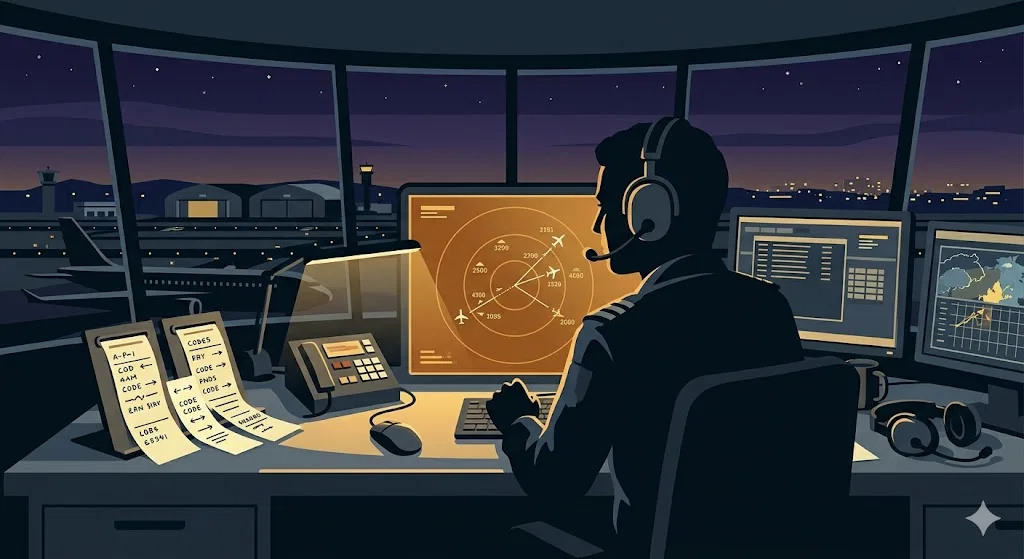
That matters in Manitoba because many reports are operationally mediated. A pilot may call air traffic control; a controller may relay the report; NAV CANADA may file the aviation occurrence information; Transport Canada may publish a CADORS entry. The resulting record can look official, but it is still usually a record of a report, not a confirmed identification.
A typical pathway can involve several layers:
- Pilot or crew observation: an aircraft crew reports unusual lights, an object near an aircraft, a possible drone, a meteor-like flash or a high-altitude object.
- Air traffic control handling: controllers may ask other crews whether they see the same thing, check known traffic, note the location, and decide whether additional notification is needed.
- NAV CANADA occurrence reporting: the event may be passed into the aviation occurrence reporting stream.
- Transport Canada publication: the occurrence may appear in CADORS with a short narrative and an event category.
- Possible escalation: if the report suggests a security, search-and-rescue or air-defence issue, other partners such as NORAD, the Royal Canadian Air Force, police or the Transportation Safety Board may become relevant.
The Transportation Safety Board’s separate reporting rules show why this is not simply a “UFO hotline”. Aircraft owners, operators, pilots-in-command, crew members and, in some cases, air traffic controllers have reporting duties for reportable aviation occurrences; the TSB also specifies rapid initial reporting and fuller follow-up for occurrences within its mandate. [Transportation Safety Board of Canada]bst.gc.caTransportation Safety Board of Canada Report an air transportation occurrenceTransportation Safety Board of CanadaReport an air transportation occurrence - Transportation Safety Board of Canada…

Why Manitoba records often mention flights, not just places
A Manitoba-linked aviation UFO report may not be a neat “sighting in Manitoba” in the way a local newspaper report is. Aviation geography follows routes, sectors, airports, air traffic responsibilities and regional control, not only provincial borders. A Winnipeg-to-Calgary flight, a flight descending into Calgary after departing Winnipeg, or a controller in Winnipeg handling prairie airspace can all create a Manitoba connection without the object being directly over downtown Winnipeg.
That is why Manitoba’s aviation records should be read through flight context. A report may matter to Manitoba UFO history because it involves Winnipeg crews, Winnipeg air traffic control, Winnipeg departures or Manitoba airspace. But the precise location can still be Alberta, Saskatchewan, north-western Ontario or a broader Prairie region depending on where the aircraft was when the report was made.
A recent example illustrates the difference. In March 2026, the Winnipeg Free Press reported that WestJet pilots on flight WJA485, travelling from Winnipeg to Calgary, had reported passing a “basketball-sized object” at about 13,000 feet while north-west of Canmore on 19 January. The report said NAV CANADA classified the occurrence under “weather balloon, meteor, rocket, CIRVIS/UFO”. [Winnipeg Free Press]winnipegfreepress.comWinnipeg Free Press'Fly WestJet, see a UFO' – Winnipeg Free Press3 days ago — NAV Canada has classified the incident, under occurrence ev…
That incident belongs on a Manitoba aviation-records page not because it proves a Manitoba object, but because it shows how a Winnipeg-origin flight can enter the Canadian aviation UFO record. It also shows the importance of the category label: the same CADORS-style bucket can contain a balloon, meteor, rocket, formal vital-intelligence sighting or an unresolved object. The label keeps the report searchable and safety-relevant, but it does not settle the explanation.
Pilots are credible observers, but not perfect sensors
Pilot reports deserve attention because trained aviation professionals are often better than casual observers at judging aircraft lights, altitude bands, traffic patterns and operational risk. They also report through systems that preserve time, location and flight context. That makes pilot cases more useful than many social-media sightings.
But aviation training does not make every distant light identifiable. A pilot looking through a cockpit window at night may still be seeing reflections, satellites, meteors, balloons, drones, military activity, atmospheric effects or another aircraft at a misleading angle. The Office of the Chief Science Advisor’s Sky Canada report identifies common explanations for UAP reports including aircraft, drones, satellites, balloons, astronomical objects and weather-related phenomena, while also stressing that Canada’s reporting landscape is fragmented and difficult to analyse consistently. [Science.gc.ca]science.gc.caManagement of Public Reporting of Unidentified Aerial Phenomena in CanadaManagement of Public Reporting of Unidentified Aerial Phenomena in Canada
The January 2024 prairie lights case shows the problem clearly. CTV reporting, summarised and preserved in multiple syndicated accounts, described several aircraft crews reporting unusual lights above the Canadian Prairies, with Winnipeg air traffic control involved in radio exchanges. The reports included pilots describing lights moving in formations, while sceptical analysis argued that Starlink satellite reflections could create the appearance of moving lights or shifting triangle-like patterns. [orbitaceromendoza.blogspot.com]orbitaceromendoza.blogspot.comOrbita Cero: Mendoza, Argentina: eneroWestJet que volaba de Winnipeg a Toronto. "Lo he… READ the "CIRVIS/#UFO" report published last… WestJet, Air Canada Express, Porter…
That is the core tension in aviation sightings. Multiple trained crews may sincerely report something strange, and the report may still be compatible with a mundane explanation once satellite positions, sun angle, altitude, timing and viewing geometry are considered. The official record is therefore a starting point for investigation, not the final answer.
CIRVIS/UFO sounds dramatic, but it is mainly reporting language
One of the most misunderstood labels in Canadian aviation UFO material is “CIRVIS/UFO”. CIRVIS means Communications Instructions for Reporting Vital Intelligence Sightings. In practice, it can be used when a sighting appears hostile, suspicious, unidentified, or otherwise important enough to be relayed through established aviation channels.
For ordinary readers, the word “vital” can make a report sound like a secret military confirmation. That is not what it means by itself. It means the event may fit a reporting category that could be relevant to airspace awareness or security. It may later prove to be a balloon, meteor, satellite, drone, aircraft or misperception.
Transport Canada’s 2022 briefing note on unidentified aerial phenomena says CADORS captures UAP reports, that the database contains preliminary aviation occurrence information, and that most information comes from NAV CANADA, with other sources including the public, operators, airports or other involved parties. The same note says further investigation into UAP sightings falls outside Transport Canada’s mandate, although the department remains open to collaboration with other departments for aviation safety and security. [Open Government Portal]search.open.canada.caOpen Government Portal Question Period NotesOpen Government Portal Question Period Notes
That statement is crucial for Manitoba readers. Transport Canada records can confirm that an aviation report was made and categorised. They usually cannot confirm that an unknown craft existed, that it behaved as first described, or that an extraordinary explanation is likely. They document the governance trail.
High-altitude objects changed how readers interpret UFO records
The 2023 high-altitude object incidents over North America made aviation UFO language more visible to the public. Transport Canada later prepared material saying it had taken action alongside government and aviation partners to mitigate safety risks, including issuing NOTAMs, or Notices to Airmen, during high-altitude object events. In the same document, the department stressed that “UFO” in CADORS can mean drones, balloons, meteors, weather phenomena and birds, and should not be read as extraterrestrial. [Transport Canada]tc.canada.caTransport Canada4. High Altitude Object IncidentsTransport Canada4. High Altitude Object Incidents
The wider Canadian context matters because Manitoba sits under the same national airspace safety architecture. A high-altitude balloon crossing western or northern Canada is not just a UFO story; it can be an aviation hazard, a security concern, a diplomatic issue and a NORAD matter. The public may encounter the story through UFO language, while the aviation system treats it as airspace management.
This is one reason Transport Canada records are often more sober than popular accounts. The system is designed to capture hazards and route information, not to tell a mystery story. A report that looks exciting in a headline may become, in official terms, a short occurrence entry with a broad category and limited follow-up.
What CADORS can and cannot tell us about Manitoba UFO history
CADORS is valuable because it adds a modern, operational layer to Manitoba’s UFO record. Older Manitoba cases such as Falcon Lake are often discussed through police, military, medical, laboratory and archival trails. Modern aviation sightings are more likely to appear as safety reports: short, timestamped entries tied to aircraft, airspace and official reporting channels.
What CADORS can do well:
- Confirm that an aviation report existed. A CADORS entry can show that an unusual object or light was serious enough to enter a national aviation occurrence system.
- Preserve operational context. It may identify the date, aircraft, route, location, altitude, reporting source and event category.
- Show how Canadian institutions handle ambiguity. It reveals that “unidentified” is managed through safety, reporting and coordination rather than a single UFO investigation bureau.
- Support cross-checking. Researchers can compare entries with weather, meteor showers, satellite passes, balloon notices, NOTAMs, ADS-B flight tracking and local witness reports.
What CADORS cannot usually do:
- It cannot prove the nature of the object. A short entry may contain only what a pilot or controller reported.
- It may not include raw audio, radar data or full follow-up. Journalists sometimes obtain audio or additional context separately, but the public CADORS entry itself can be sparse.
- It is not always a final investigation report. Transport Canada describes CADORS information as preliminary aviation occurrence information, and the system supplements normal reporting and investigation procedures rather than replacing them. [Open Government Portal]search.open.canada.caOpen Government Portal Question Period NotesOpen Government Portal Question Period Notes
- It can mix very different phenomena in one category. “Weather balloon, meteor, rocket, CIRVIS/UFO” is a broad administrative lane, not a precise explanation.
This makes CADORS both useful and easy to overread. For Manitoba, the best use is to treat aviation records as a disciplined index of reported anomalies, then test each case against external evidence.
Why “unidentified” can mean many things over Manitoba
Manitoba’s geography makes aviation sightings especially prone to mixed explanations. The province has dark rural skies, long winter nights, wide horizons, remote northern routes, military and civil aviation activity, medevac flights, drones, satellites, auroral conditions and meteor activity. A bright object over a lake, highway, airport approach or prairie horizon may be hard to identify even for experienced observers.
The Canadian UFO Survey’s recent findings support that caution. The 2025 survey counted 1,052 Canadian UFO reports, but only 3.42 per cent were classified as unexplained; Chris Rutkowski told Global News that most reports had simple or easily explained configurations such as aircraft, satellites and planets. [Global News]globalnews.caGlobal News Reports of UFO sightings in Canada jumped last yearGlobal News Reports of UFO sightings in Canada jumped last year
The Office of the Chief Science Advisor made a related point from a governance perspective. Its Sky Canada report estimated that Canadians report roughly 600 to 1,000 UAP sightings annually, but said the absence of a single data-collection organisation makes the number and nature of observations difficult to establish conclusively, partly because the same sighting can be reported to more than one organisation. [Science.gc.ca]science.gc.caManagement of Public Reporting of Unidentified Aerial Phenomena in CanadaManagement of Public Reporting of Unidentified Aerial Phenomena in Canada
For Manitoba aviation sightings, that means the strongest interpretation is usually modest: a report may be real, sincere and worth logging, while the object remains unconfirmed. “Unidentified” is a status of available information, not a claim of exotic origin.
How to read a Manitoba aviation UFO report without being misled
The most useful way to read a Transport Canada or CADORS-linked UFO report is to separate four questions that often get blurred together.
First, what was actually reported? Look for the exact wording: light, object, drone, balloon, meteor, formation, flash, near miss, altitude, bearing, duration. A “basketball-sized object” near a flight path is a different safety question from distant lights above the horizon.
Second, who reported it? A pilot, controller, police agency, airport operator or member of the public may all create a record, but each source has different strengths and limits. A pilot report has operational value, but still depends on viewing angle, lighting, workload and available instruments.
Third, what category was assigned? Labels such as “CIRVIS/UFO”, “weather balloon”, “meteor”, “rocket” or “laser interference” may reflect administrative fit more than final identification. Transport Canada has acknowledged that CADORS captures a smaller number of UAP-type reports than the broader public UFO-survey total and that the categories may include several ordinary phenomena. [Open Government Portal]search.open.canada.caOpen Government Portal Question Period NotesOpen Government Portal Question Period Notes
Fourth, what follow-up exists? A strong case should have more than a short entry: corroborating crews, radar or sensor data, audio, weather checks, satellite analysis, NOTAMs, military response, photographs, debris, or a later explanation. Without that, the record remains a useful report but not a strong conclusion.

Why these records still matter
Transport Canada records matter precisely because they are not written like UFO lore. They show how ambiguity is processed by a real safety system. In Manitoba, that gives readers a bridge between the province’s older, famous cases and the modern reality of pilots, controllers, drones, satellites, balloons and public reporting.
They also show why a balanced Manitoba UFO history should include governance as well as sightings. The interesting question is not only “what was in the sky?” It is also “who received the report, what did they do with it, what category did they use, and what evidence survived?” CADORS does not solve every case, but it helps keep modern aviation sightings anchored to dates, routes, airspace and official procedures rather than rumour alone.
For Manitoba, the strongest conclusion is cautious but meaningful: official aviation records do not validate extraordinary claims by themselves, yet they do preserve a small, important class of sightings that entered Canada’s aviation safety system. Those entries are best read as evidence of reported uncertainty, not evidence of confirmed alien craft.
Amazon book picks
Further Reading
Books and field guides related to How Official Aviation Reports Handle UFOs. Use these as the next step if you want deeper reading beyond the article.
UFOs
Strong focus on pilot reports, government documentation, and how official institutions handle unexplained aerial sightings.
The UFO Experience
Explores classification of sightings and the distinction between unidentified reports and extraordinary explanations.
In Plain Sight: an Investigation Into UFOs and Impossible Sci...
Examines modern government, military, and aviation-related UFO cases and reporting systems.
The Report on Unidentified Flying Objects
Written by the former head of Project Blue Book and centered on official investigation procedures and case evaluation.
eBay marketplace picks
Marketplace Samples
Example marketplace items related to this page. Use the search link to explore similar finds on eBay.



Endnotes
-
Source: tc.canada.ca
Title: Transport Canada4. High Altitude Object Incidents
Link: https://tc.canada.ca/en/binder/4-high-altitude-object-incidents -
Source: tc.canada.ca
Title: Transport Canada The Civil Aviation Daily Occurrence Reporting System (CADORS)
Link: https://tc.canada.ca/en/aviation/publications/aviation-safety-letter/issue-2-2021/civil-aviation-daily-occurrence-reporting-system-cadors -
Source: laws-lois.justice.gc.ca
Title: Canadian Aviation Regulations
Link: https://laws-lois.justice.gc.ca/eng/regulations/SOR-96-433/page-111.html/page-56.html -
Source: tc.canada.ca
Link: https://tc.canada.ca/en/aviation/aviation-publications/civil-aviation-daily-occurrence-reporting-system-cadors-manual-tp-4044Source snippet
Transport CanadaCivil Aviation Daily Occurrence Reporting System (CADORS) Manual - TP 4044...
-
Source: science.gc.ca
Title: Management of Public Reporting of Unidentified Aerial Phenomena in Canada
Link: https://science.gc.ca/site/science/en/office-chief-science-advisor/sky-canada-project/management-public-reporting-unidentified-aerial-phenomena-canada -
Source: orbitaceromendoza.blogspot.com
Title: Orbita Cero: Mendoza, Argentina: enero
Link: https://orbitaceromendoza.blogspot.com/2024/01/Source snippet
WestJet que volaba de Winnipeg a Toronto. "Lo he... READ the "CIRVIS/#UFO" report published last... WestJet, Air Canada Express, Porter...
-
Source: search.open.canada.ca
Title: Open Government Portal Question Period Notes
Link: https://search.open.canada.ca/qpnotes/record/tc%2CTC-2022-QP-00005 -
Source: science.gc.ca
Title: sky canada report
Link: https://science.gc.ca/site/science/sites/default/files/documents/sky-canada-report.pdf -
Source: ised-isde.canada.ca
Title: preview sky canada report ocsa
Link: https://ised-isde.canada.ca/site/science/en/office-chief-science-advisor/sky-canada-project/preview-sky-canada-report-ocsa -
Source: ised-isde.canada.ca
Title: sky canada project
Link: https://ised-isde.canada.ca/site/science/en/office-chief-science-advisor/sky-canada-project -
Source: open.canada.ca
Link: https://open.canada.ca/data/en/dataset/a348c1d1-2392-4595-b5e2-c6a244a7e87f -
Source: tc.canada.ca
Title: issue 2 2021
Link: https://tc.canada.ca/en/aviation/publications/aviation-safety-letter/issue-2-2021 -
Source: tc.canada.ca
Title: report incident affecting airport aerodrome safety
Link: https://tc.canada.ca/en/aviation/operating-airports-aerodromes/report-incident-affecting-airport-aerodrome-safety -
Source: tc.canada.ca
Link: https://tc.canada.ca/en/aviation/reference-centre/exemptions-canadian-aviation-regulations-cars/exemption-standards-specified-cadors-manual-made-pursuant-section-80701-canadian-aviation-regulations -
Source: laws-lois.justice.gc.ca
Link: https://laws-lois.justice.gc.ca/eng/regulations/SOR-96-433/page-111.html/page-33.html -
Source: laws-lois.justice.gc.ca
Title: justice.gc.ca Canadian Aviation Regulations (SOR /96-433)604.176
Link: https://laws-lois.justice.gc.ca/eng/regulations/sor-96-433/ -
Source: norad.mil
Link: https://www.norad.mil/ -
Source: youtube.com
Link: https://www.youtube.com/watch?v=5VQRoDa8JX4Source snippet
Transport Canada CADORS UFO aviation pilot sightings Lights In The Sky Over Baffin Bay Dec 15 2022 #ufo #uap #joerogan #aviation #pirep @...
-
Source: bst.gc.ca
Title: Transportation Safety Board of Canada Report an air transportation occurrence
Link: https://www.bst.gc.ca/eng/incidents-occurrence/aviation/index.htmlSource snippet
Transportation Safety Board of CanadaReport an air transportation occurrence - Transportation Safety Board of Canada...
-
Source: winnipegfreepress.com
Link: https://www.winnipegfreepress.com/breakingnews/2026/03/21/fly-westjet-see-a-ufoSource snippet
Winnipeg Free Press'Fly WestJet, see a UFO' – Winnipeg Free Press3 days ago — NAV Canada has classified the incident, under occurrence ev...
-
Source: globalnews.ca
Title: Global News Reports of UFO sightings in Canada jumped last year
Link: https://globalnews.ca/news/11723579/ufo-sightings-in-canada-2025/ -
Source: globalnews.ca
Title: alberta rcmp ufo sightings
Link: https://globalnews.ca/news/7827693/alberta-rcmp-ufo-sightings/ -
Source: publications.gc.ca
Link: https://publications.gc.ca/site/eng/9.954480/publication.html -
Source: books.google.com
Link: https://books.google.com/books/about/CADORS.html?id=0HALHQAACAAJ
Additional References
-
Source: youtube.com
Link: https://www.youtube.com/watch?v=DgbNKOK7lr4Source snippet
Sky Canada Project, UFOs, UAPs and FOIA | UAP Files Podcast S3E7 | Daniel Otis...
-
Source: youtube.com
Title: Sky Canada Project, UFOs, UAPs and FOIA | UAP Files Podcast S3E7 | Daniel Otis
Link: https://www.youtube.com/watch?v=BPBzvNkDOTkSource snippet
Air traffic control audio: Pilot reports unusual lights over Quebec on Feb. 12, 2023...
-
Source: youtube.com
Link: https://www.youtube.com/watch?v=yuwQMa0xL28Source snippet
The truth is out there: How Canada tracks UFOs...
-
Source: youtube.com
Title: The truth is out there: How Canada tracks UFOs
Link: https://www.youtube.com/watch?v=hWistYd7VngSource snippet
Air traffic control audio: Flight almost hits unidentified object over Lake Ontario on Nov. 14, 2016...
-
Source: facebook.com
Link: https://www.facebook.com/PreparingforPoleshift/posts/a-ufo-was-captured-over-the-skies-of-canada/895183285949702/ -
Source: canadacommons.ca
Link: https://canadacommons.ca/artifacts/30345867/air-traffic-organization-occurrence-reporting/31245707/ -
Source: facebook.com
Link: https://www.facebook.com/groups/1456083107944941/posts/4146330022253556/ -
Source: reddit.com
Link: https://www.reddit.com/r/flying/comments/hbrcih/cador/ -
Source: fatiguemanagersnetwork.org
Link: https://fatiguemanagersnetwork.org/wp-content/uploads/Canada_Transport-Canada_Safety-Management-System-Development-Guide-for-Smaller-Aviation-Organizations.pdf -
Source: facebook.com
Link: https://www.facebook.com/groups/letstalkalbertaindependence/posts/1707926206472248/
Topic Tree