Within Coastal Skies
Could that UFO be a light at sea?
Lighthouses, buoys, ferries and working vessels can become puzzling lights when distance, fog and darkness hide their marine context.
On this page
- How shore observers lose distance and scale
- Buoys, lighthouses and vessel lights as candidates
- When a marine light explanation is too easy
Page outline Jump by section
Introduction
Marine navigation lights are a strong ordinary explanation for some Nova Scotia UFO reports, especially when a witness is watching from shore across dark water. A lighthouse, buoy, ferry, fishing vessel, pilot boat or offshore work light can seem to hover, pulse, change colour or move strangely when fog, distance and the horizon hide its marine setting. That does not mean every coastal UFO report is solved by “it was a boat”. It means the sea itself supplies a large, documented system of night lights that investigators should check before reaching stranger conclusions.
 Nova Scotia is a particularly good place for this confusion because its UFO history is inseparable from harbours, fishing communities, ferry routes, shipping lanes and lighthouse coasts. Canada’s official Atlantic “List of Lights, Buoys and Fog Signals” covers the Bay of Fundy, the south-western and eastern coasts of Nova Scotia, Cape Breton Island and the Bras d’Or Lakes, listing positions, characteristics, heights and ranges of marine aids to navigation. [e-Navigation Portal]e-navigation.canada.cae-Navigation PortalList of Lights, Buoys and Fog Signals for the Atlantic Coast9 Sept 2015 — Contains lights in the Bay of Fundy and alon… For a serious UFO assessment, that list is not background trivia. It is part of the evidence trail.
Why lights at sea can look airborne
A shore witness normally judges distance by comparing an object with familiar surroundings: trees, buildings, hills, roads or other aircraft. At night over the Atlantic, many of those reference points disappear. A single white light beyond a harbour mouth may look close, high and stationary, even when it is fixed to a buoy, mounted on a lighthouse, or carried by a vessel moving slowly along a channel.
Marine lights are also designed to be noticed. The Canadian Hydrographic Service describes nautical publications as companions to charts, and the Canadian Coast Guard’s light lists provide information on lights, buoys, lightstations, fog signals and other aids that help mariners navigate safely. [e-Navigation Portal]e-navigation.canada.cae-Navigation PortalNautical Charts and publicationsCanadian Hydrographic Service (CHS)'s nautical charts and publications help ensure the… What helps a mariner can puzzle a land observer: a flashing white light may look like a signal from a hovering object; red and green sidelights may suggest a structured craft; and lights seen through mist may appear larger or higher than they really are.
Nova Scotia’s lighthouse history makes this especially relevant. Nova Scotia Archives notes that hydrographic charts, sailing directions, navigational markers and buoys supported daylight and fair-weather navigation, while lighthouses, lightships and fog alarms gave ships security at night and in poor weather. [Nova Scotia Archives]archives.novascotia.caOpen source on novascotia.ca. In UFO terms, that means many “mysterious coastal lights” begin in a landscape where official light sources have been deliberately placed for generations.
Buoys, lighthouses and vessels as candidates
The first practical question is not “could this be extraterrestrial?” but “what marine light was in that direction at that time?” Canada’s current navigation system includes fixed lights, lighted buoys, range lights, fog signals, racons and other aids. The Coast Guard notes that the system has changed over time, including the use of LED lanterns and newer buoy materials. [Canada]canada.cacanadian aids navigation system 2023canadian aids navigation system 2023 Older witness memories and modern sightings should therefore be checked against the correct year’s publications, not just a present-day map.
Several marine candidates matter for Nova Scotia UFO reports:(#endnote-17 “Endnote 17”) [archives.novascotia.ca]archives.novascotia.caSource details in endnotes.
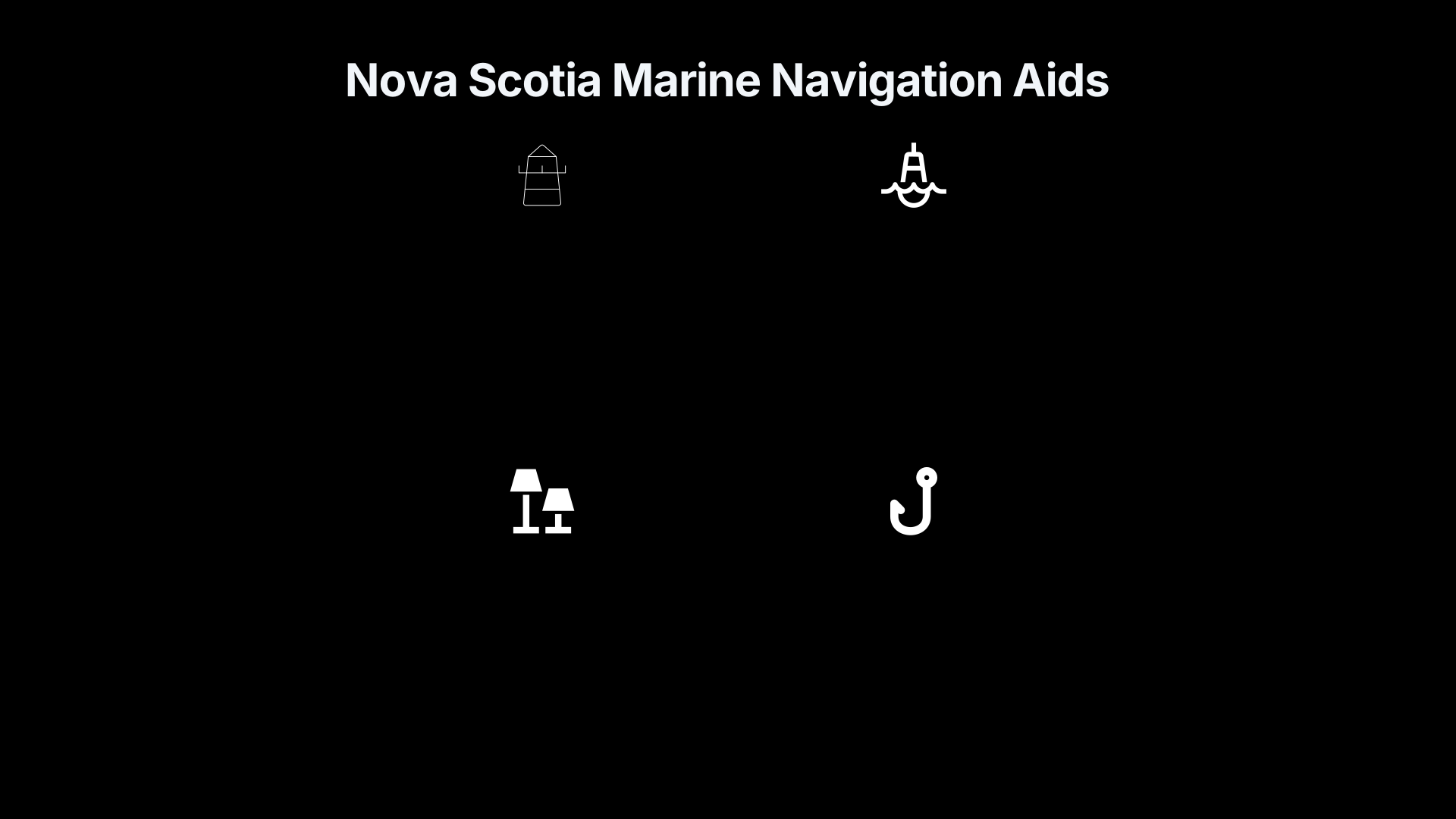
Lighthouses and lightstations can seem to blink, sweep or flare when seen through cloud, fog or gaps in shoreline. A light that is ordinary from a nautical chart can look dramatic from a beach or road if the observer does not know where the light is.
Lighted buoys can appear to rise and fall as waves lift them, giving the impression of controlled motion. Their flashing rhythms may be mistaken for deliberate signalling, particularly when several aids are visible in the same field of view.
Fishing vessels, ferries and working boats can create clusters of lights rather than a single point. Deck lights, masthead lights and movement along a channel can produce a shape that looks suspended over the water.
Range lights are especially easy to misunderstand. They are meant to line up for navigation, so from some angles they can appear as paired or stacked lights. If haze hides the shoreline, the pair may look like part of one object rather than two fixed aids.
The official Atlantic list is useful because it records not just names and positions but characteristics such as colour, flash pattern, height and nominal range. [Publications.gc.ca]publications.gc.caOpen source on gc.ca. Those details can either strengthen a marine-light explanation or rule it out.
The Shag Harbour lesson
Shag Harbour should not be reduced to “probably a lighthouse” or “definitely not a marine light”. Its value here is more careful: it shows why coastal UFO reports in Nova Scotia must be investigated through both sky and sea evidence.
Library and Archives Canada describes the 4 October 1967 Shag Harbour sighting as Canada’s most famous UFO incident and notes that it was investigated by the RCMP and Canadian Forces. [recherche-research.bac-lac.gc.ca]recherche-research.bac-lac.gc.caOpen source on gc.ca. The case began with lights apparently descending towards the water, and witnesses initially feared an aircraft crash. That first interpretation matters. People were not merely reporting a strange object in an abstract sky; they were trying to understand lights in a coastal environment where aircraft, vessels and the sea horizon could all be involved.
The later mystery around Shag Harbour does not mean every Nova Scotia sea-light report deserves the same status. It means investigators should preserve the sequence: witness description, direction, timing, weather, known aircraft, marine traffic, aids to navigation, search records and later archival material. Canada’s Sky Canada report makes the broader point clearly: “unidentified” does not imply extraterrestrial origin, defiance of natural explanation, or permanent resistance to identification if better data becomes available. [science.gc.ca]science.gc.caOpen source on gc.ca.
When the marine-light answer is too easy
A marine explanation becomes weak when it is used as a label rather than a test. “It was probably a buoy” is not good enough unless the buoy existed, was operating, was in the right direction, had the right colour and flash pattern, and was visible from the witness position.
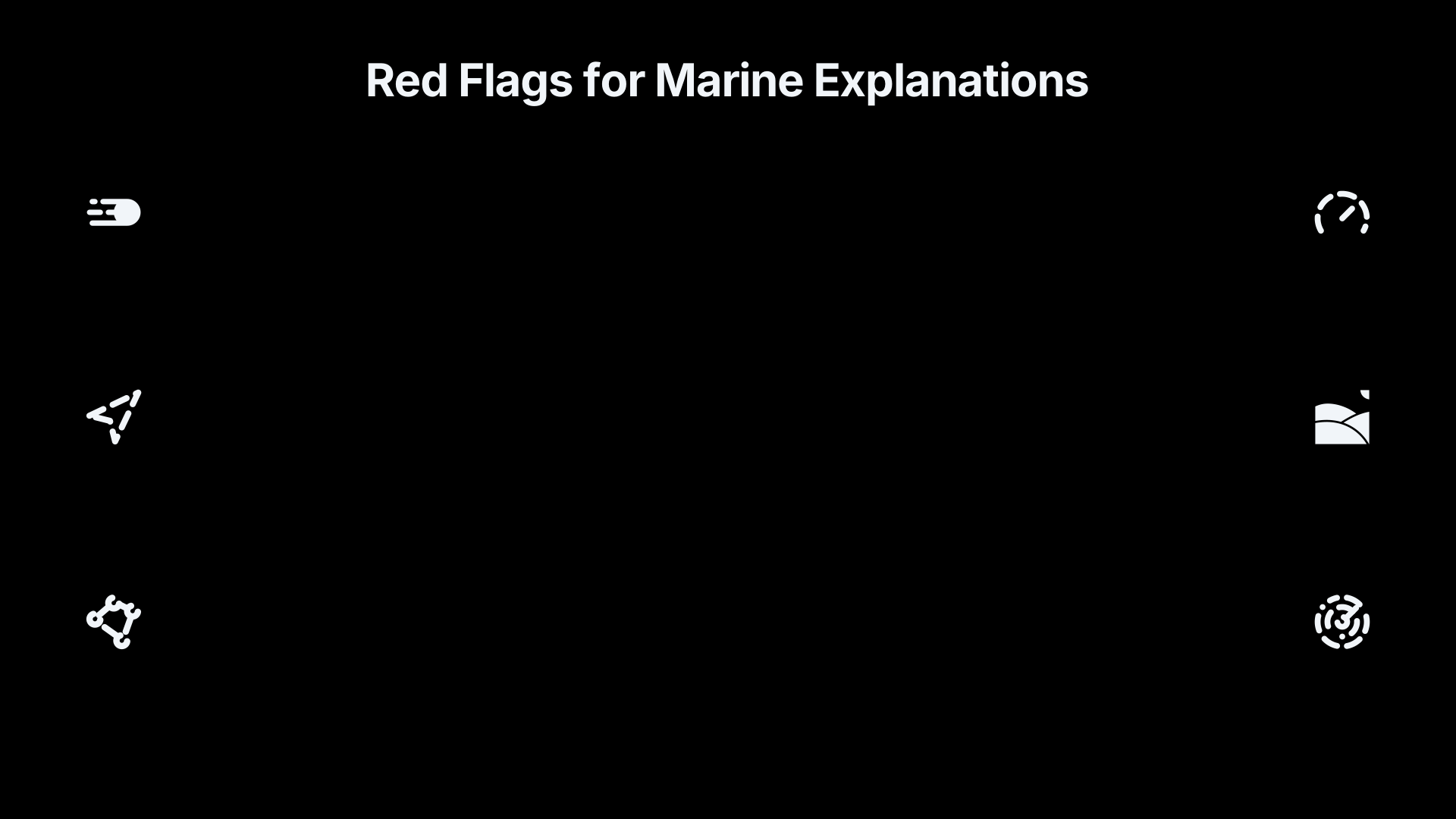
There are several warning signs that the explanation may be overreaching:
- The reported light moved rapidly against the background in a way a fixed aid could not.
- The colour or flash rhythm does not match the relevant light list.
- The sighting direction does not line up with a known aid, vessel route or harbour channel.
- Weather or terrain would have blocked the candidate light.
- Several independent witnesses at different locations describe geometry that does not fit a single marine source.
- The report includes sound, radar, search records or physical traces that require separate assessment.
The Coast Guard also cautions that aids to navigation are not always a perfect fixed reality: navigational warnings and Notices to Mariners exist because aids can be changed, damaged, missing, unlit, displaced or seasonally altered. [e-Navigation Portal]e-navigation.canada.caOpen source on canada.ca. That cuts both ways. A missing or shifted aid may explain a confusing light; it may also invalidate a tidy explanation based on today’s chart.
How to check a Nova Scotia sea-light report
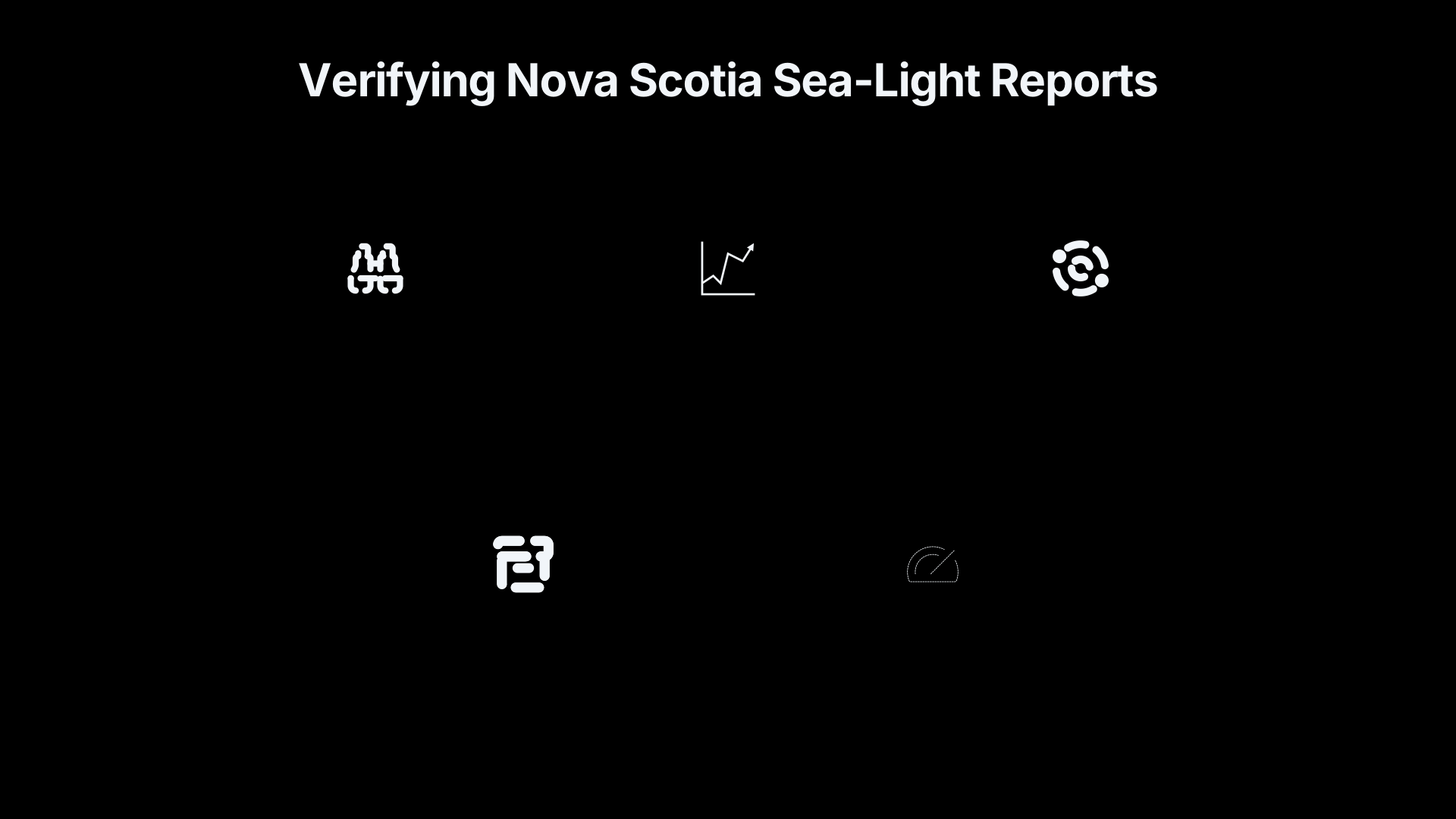
A useful investigation starts with the witness’s point of view. Where exactly was the observer standing? Which direction were they facing? Was the horizon visible? Was there fog, rain, sea smoke, low cloud or glare from harbour lights? A report from a wharf, ferry terminal, coastal road or headland should be treated differently from a report inland.
The next step is to compare the sighting with marine records. Canadian nautical charts, Sailing Directions, the Coast Guard’s List of Lights, Buoys and Fog Signals, and current or historical Notices to Mariners can identify fixed lights, seasonal buoys, fog signals and changes to aids. [Pêches et Océans Canada]charts.gc.caOpen source on gc.ca. For older sightings, historical light lists and lighthouse archives matter because the coastal lighting system changes over time.
Finally, the marine explanation should be weighed alongside other ordinary candidates. In Nova Scotia, a puzzling light over water might be a vessel, buoy, lighthouse, aircraft approach light, search-and-rescue activity, flare, meteor, bright planet or optical effect near the horizon. The strongest conclusion is often modest: not “proved alien” or “nothing happened”, but “consistent with a known marine light”, “not well matched to any listed aid”, or “unresolved because the sighting lacks enough position and timing data”.
Why this matters for Nova Scotia UFO history
Marine navigation lights matter because they keep Nova Scotia UFO history honest. The province’s coastal setting produces some of Canada’s most atmospheric UFO stories, but it also supplies many ordinary lights that can be mistaken for objects in the sky. Treating those lights seriously does not dismiss witnesses. It respects the difficulty of observing at night over water.
For public-facing UFO history, the best approach is neither automatic belief nor automatic debunking. A lighthouse, buoy or vessel light should be considered early, checked carefully, and rejected when it does not fit. That method leaves room for genuinely unresolved cases while preventing weak reports from becoming stronger in the retelling simply because no one checked the sea.
Amazon book picks
Further Reading
Books and field guides related to Could that UFO be a light at sea?. Use these as the next step if you want deeper reading beyond the article.
The UFO Experience
Supports the page's investigative framing by encouraging careful classification of UFO reports before accepting exotic explanations.
UFOs
Broadens the page from one coastal explanation to credible UFO case assessment and witness interpretation.
UFOs: Generals, Pilots, and Government Officials Go on the Re...
Broadens the page from one coastal explanation to credible UFO case assessment and witness interpretation.
eBay marketplace picks
Marketplace Samples
Example marketplace items related to this page. Use the search link to explore similar finds on eBay.
Endnotes
-
Source: e-navigation.canada.ca
Link: https://e-navigation.canada.ca/gn/description/eng/1449a2d2-ba89-4868-b606-931b7624c216Source snippet
e-Navigation PortalList of Lights, Buoys and Fog Signals for the Atlantic Coast9 Sept 2015 — Contains lights in the Bay of Fundy and alon...
-
Source: e-navigation.canada.ca
Link: https://e-navigation.canada.ca/topics/charts/index-enSource snippet
e-Navigation PortalNautical Charts and publicationsCanadian Hydrographic Service (CHS)'s nautical charts and publications help ensure the...
-
Source: canada.ca
Title: canadian aids navigation system 2023
Link: https://www.canada.ca/en/canadian-coast-guard/corporate/publications/canadian-aids-navigation-system-2023.html -
Source: publications.gc.ca
Link: https://publications.gc.ca/collections/collection_2026/mpo-dfo/Fs151-9-2026-1-eng.pdf -
Source: recherche-research.bac-lac.gc.ca
Link: https://recherche-research.bac-lac.gc.ca/eng/public/list/43130 -
Source: science.gc.ca
Link: https://science.gc.ca/site/science/en/office-chief-science-advisor/sky-canada-project/management-public-reporting-unidentified-aerial-phenomena-canada -
Source: e-navigation.canada.ca
Link: https://e-navigation.canada.ca/topics/notices/index-en -
Source: publications.gc.ca
Link: https://publications.gc.ca/collections/collection_2025/mpo-dfo/Fs151-9-2025-07-eng.pdf -
Source: publications.gc.ca
Link: https://publications.gc.ca/collections/collection_2023/mpo-dfo/Fs151-9-2023-08-eng.pdf -
Source: publications.gc.ca
Link: https://publications.gc.ca/collections/collection_2026/mpo-dfo/Fs151-6-2-2025-12-eng.pdf -
Source: publications.gc.ca
Link: https://publications.gc.ca/collections/collection_2016/mpo-dfo/Fs152-5-41-3-eng.pdf -
Source: canada.ca
Link: https://www.canada.ca/en/canadian-coast-guard/corporate/videos/canadian-aids-navigation-system-typical-waterway.html -
Source: ised-isde.canada.ca
Title: sky canada project
Link: https://ised-isde.canada.ca/site/science/en/office-chief-science-advisor/sky-canada-project -
Source: tc.canada.ca
Title: ca4. High Altitude Object Incidents
Link: https://tc.canada.ca/en/binder/4-high-altitude-object-incidents -
Source: science.gc.ca
Title: questions and answers about sky canada project
Link: https://science.gc.ca/site/science/en/office-chief-science-advisor/sky-canada-project/questions-and-answers-about-sky-canada-project -
Source: charts.gc.ca
Title: index eng
Link: https://charts.gc.ca/publications/index-eng.htmlSource snippet
Pêches et Océans CanadaNautical publications27 Jan 2025 — Providing descriptions and locations of external aids to navigation – lights, b...
-
Source: archives.novascotia.ca
Link: https://archives.novascotia.ca/lighthouses/ -
Source: charts.gc.ca
Link: https://www.charts.gc.ca/publications/sailingdirections-instructionsnautiques-eng.html -
Source: archives.novascotia.ca
Title: ca Virtual Archives and Databases
Link: https://archives.novascotia.ca/virtual/ -
Source: archives.novascotia.ca
Title: ca Uniacke’s Sketches of Cape Breton
Link: https://archives.novascotia.ca/pdf/library/UniackeSketchesCapeBreton-F90N85AR2N.pdf -
Source: archives.novascotia.ca
Link: https://archives.novascotia.ca/pdf/library/NovaScotiaHistoricalReview-4-1-1984.pdf -
Source: archives.novascotia.ca
Link: https://archives.novascotia.ca/pdf/library/Report1947-PublicArchivesNovaScotia.pdf -
Source: archives.novascotia.ca
Link: https://archives.novascotia.ca/pdf/library/NovaScotiaHistoricalReview-2-1-1982.pdf -
Source: archives.novascotia.ca
Link: https://archives.novascotia.ca/pdf/library/NovaScotiaHistoricalQuarterly-6-4-1976.pdf -
Source: archives.novascotia.ca
Title: Catalogue Akins Collection Books F90N85AR2PNo1
Link: https://archives.novascotia.ca/pdf/library/CatalogueAkinsCollectionBooks-F90N85AR2PNo1.pdf -
Source: archives.novascotia.ca
Title: governor wentworths nova scotia letter books
Link: https://archives.novascotia.ca/lists/governor-wentworths-nova-scotia-letter-books.pdf -
Source: archives.novascotia.ca
Title: ca Nova Scotia Archives
Link: https://archives.novascotia.ca/lighthouses/archives/?ID=168 -
Source: canadacommons.ca
Title: atlantic coast
Link: https://canadacommons.ca/artifacts/19268342/atlantic-coast/20168883/ -
Source: canadacommons.ca
Link: https://canadacommons.ca/artifacts/18118221/lights-buoys-and-fog-signals/19017737/ -
Source: rcmsar12.org
Link: https://www.rcmsar12.org/page/aids -
Source: globalnews.ca
Link: https://globalnews.ca/news/3761270/canadas-best-documented-ufo-sighting-still-intrigues-50-years-on/
Additional References
-
Source: youtube.com
Title: What Lights Do You Need For Safe Night Boat Navigation?
Link: https://www.youtube.com/watch?v=0n8iUAeSuL8Source snippet
COLREGs Rule 21 – Navigation Lights & Shapes Explained...
-
Source: youtube.com
Title: COLREGs Rule 21 – Navigation Lights & Shapes Explained
Link: https://www.youtube.com/watch?v=bGd-_iUJpuESource snippet
COLREGs Rule 22 – Visibility of Navigation Lights...
-
Source: instagram.com
Link: https://www.instagram.com/p/DYNh49JAZsV/ -
Source: facebook.com
Link: https://www.facebook.com/CanadianCoastGuard/posts/did-you-know-the-coast-guard-once-searched-for-a-possible-ufo-in-1967-residents-/1138213549994735/ -
Source: reddit.com
Link: https://www.reddit.com/r/maritime/comments/18bm8ho/deep_sea_mariners_have_any_of_you_seen_ufos_or/ -
Source: facebook.com
Link: https://www.facebook.com/earthsciencesnz/posts/ghost-ship-mirage-scientific-explanation-100-per-cent-the-golden-ghost-ship-loca/1464134949085187/ -
Source: facebook.com
Link: https://www.facebook.com/LibraryArchives/posts/we-may-not-be-area-51-but-did-you-know-that-we-hold-a-vast-collection-of-ufo-fil/588151890149717/ -
Source: ibiblio.org
Link: https://www.ibiblio.org/lighthouse/nse.htm -
Source: fao.org
Link: https://www.fao.org/fishery/openasfa/074da3ed-4455-4094-949b-e1677be8d166/en -
Source: facebook.com
Link: https://www.facebook.com/novascotiasouthshore/posts/51-years-ago-in-1967-a-ufo-was-sighted-as-it-splashed-down-into-the-ocean-becomi/2358445784185404/
Topic Tree